An official website of the United States government

Official websites use .gov
A .gov website belongs to an official government organization in the United States.

Secure .gov websites use HTTPS
A lock () or https:// means you’ve safely connected to the .gov website. Share sensitive information only on official, secure websites.

OPA

<p>Office of Public Affairs</p>

Dear Tribal Leader Letter: DTTL Banned Electronic Equipment, Software and Services

United States Department of the Interior
OFFICE OF THE SECRETARY
Washington, DC 20240
OCT 26, 2020

Dear Tribal Leader:

BIA Logo Indian Affairs - Office of Public Affairs

Department of State on Continued Efforts to Repatriate Cultural Items to Native American Communities

Media Contact: NewsMedia@bia.gov
For Immediate Release: October 30, 2020

In September, President Trump announced the successful repatriation of ancestral remains and funerary items from Tribes associated with the Mesa Verde region from Finland. Following that effort, the White House has asked the U.S. Departments of the Interior and State to work together to assist other Native American tribes in the repatriation of any additional cultural items abroad.

In response to this mandate, the U.S. Department of State has requested U.S. embassies around the world to send information about Native American collections overseas to the Department’s Bureau of Educational and Cultural Affairs.

The Bureau of Indian Affairs at the U.S. Department of the Interior has announced formal government-to-government consultations will take place with Tribes on Wednesday, December 2, 2020. The announcement was issued through a Dear Tribal Leader letter dated October 26, 2020.

“The Department of the Interior is a proud partner with the U.S. Department of State in assisting tribes with their efforts to bring home from overseas objects and remains that are part of their cultural patrimony,” said Assistant Secretary for Indian Affairs Tara Katuk Mac Lean Sweeney. “We take our NAGPRA responsibilities very seriously, including investigating illegally obtained items. We will continue working with our federal, tribal, state and local law enforcement partners to ensure they are safely returned to their rightful homes.”

“The U.S. Department of State’s Bureau of Educational and Cultural Affairs raises awareness overseas about the damage to tribal communities when sacred items are bought and sold. Protecting Native American cultural property internationally continues to build a safer and more peaceful world for all global citizens,” said Assistant Secretary of State for Educational and Cultural Affairs Marie Royce.

“Part of President Trump’s “Putting America’s First American’s First” plan is to honor Native American heritage, and this initiative shows further action, in partnership with tribal leaders, to repatriate Native American artifacts important to tribal communities across the Nation,” said Doug Hoelscher, Assistant to the President & Director of White House Intergovernmental Affairs.

Repatriation of Native American ancestral remains and items of cultural, spiritual and community significance is a priority for the Trump Administration, and the U.S. Departments of the Interior and State are interested in facilitating these repatriation efforts.  Both Departments have supported several international repatriations from foreign museums in recent years in response to Native American Tribes’ requests for assistance.

The Native American Graves Protection and Repatriation Act of 1990 (NAGPRA), requires U.S. institutions to consult with Native Americans about their collections and to return certain sensitive cultural items, including ancestral remains. Since its passage approximately 1.9 million such items have been returned to Native American communities that depend on them for their well-being. The Trump Administration is committed to using NAGPRA as a model at the international level to seek the repatriation of Native American items of cultural, spiritual and community significance.

For further information, please contact the Department of State’s Bureau of Educational and Cultural Affairs at eca-press@state.gov and the Department of the Interior’s Office of Public Affairs at interior_press@ios.doi.gov.

####


https://www.bia.gov/as-ia/opa/online-press-release/media-note-joint-statement-us-department-interior-and-us
BIA Logo Indian Affairs - Office of Public Affairs
Media Contact: NewsMedia@bia.gov
For Immediate Release: September 21, 2020

WASHINGTON – Assistant Secretary – Indian Affairs Tara Katuk Sweeney announced today that approximately $5.5 million is available for Office of Indian Energy and Economic Development (IEED) Energy Mineral Development Program (EMDP) grants to help federally recognized American Indian tribes, Alaska Native entities and tribal energy resource development organizations identify, evaluate or assess the market for energy or mineral resources to be developed. EMDP will fund about 25 to 30 grants. The application deadline is December 2, 2020.

EMDP grants fund resource inventories and assessments, feasibility studies, or other pre-development studies related to energy and mineral resources. Assessments and studies funded through EMDP focus on biomass (woody and waste) for heat or electricity; transportation fuels; hydroelectric, solar or wind generation; geothermal heating or electricity production; district heating; other forms of distributed energy generation; oil, natural gas, geothermal and helium; and sand and gravel, coal, precious minerals and base minerals.

“Revenues from the development of energy and mineral resources are second only to gaming as a source of revenues for tribes,” Assistant Secretary Sweeney said. “The feasibility studies and resource assessments funded by EMDP are a necessary first step in developing those resources. I encourage all those interested to submit proposals for this important funding opportunity.”

IEED’s solicitation for EMDP funding and details on how to apply can be found in the Federal Register notice published on September 3 and at the Grants.Gov website.

EMDP is a competitive, discretionary program. To qualify for funding, applicants must submit a proposal and a supporting tribal resolution to IEED by December 2, 2020, using the standard Application for Federal Assistance Form SF-424 and the Project Narrative Attachment Form, both of which can be found at Grants.gov.

Applications will be evaluated chiefly on the basis of a project’s potential to attract financing, create jobs, generate revenues, and foster other long-term benefits to a Native community, as well as the clarity and completeness of the application’s scope of work, deliverables and budget.

IEED is administering this program through its Division of Energy and Mineral Development (DEMD).

Questions about EMDP may be addressed to: Ms. Winter Jojola-Talburt, Deputy Chief, Division of Energy and Mineral Development at 13922 Denver West Pkwy, Suite 200, Lakewood, CO 80401; by telephone at (720) 207-8063; or by email at winter.jojola-talburt@bia.gov.

Please visit the IEED website for more information about other IEED programs and services.

The Assistant Secretary – Indian Affairs advises the Secretary of the Interior on Indian Affairs policy issues, communicates policy to and oversees the programs of the BIA and the BIE, provides leadership in consultations with tribes, and serves as the DOI official for intra- and inter-departmental coordination and liaison within the Executive Branch on Indian matters.

####


https://www.bia.gov/as-ia/opa/online-press-release/assistant-secretary-tara-sweeney-announces-55-million-available-ieed

Federal Indian Boarding School Initiative

In June 2021, Secretary of the Interior Deb Haaland announced the Federal Indian Boarding School Initiative, a comprehensive effort to recognize the troubled legacy of federal Indian boarding school policies with the goal of addressing their intergenerational impact and to shed light on the traumas of the past. 

The announcement directed the Department, under the leadership of Assistant Secretary for Indian Affairs Bryan Newland, to prepare an investigative report, the first volume of which was released in May 2022, detailing available historical records relating to federal Indian boarding schools and to develop the first official list of sites.  

The Department released the second and final volume of the investigative report, in July 2024. The second volume builds on the initial volume to significantly expand on the number and details of institutions to include student deaths, the number of burial sites, participation of religious institutions and organizations, and federal dollars spent to operate these locations. It also included policy recommendations for consideration by Congress and the Executive Branch to continue to chart a path to healing and redress for Indigenous communities and the nation.  

On October 25, 2024, President Joe Biden issued a historic apology for the U.S. Indian Boarding Schools program, which sought to erase Native cultures and assimilate Native children. 

For more information regarding the Federal Indian Boarding School Initiative, go to the Department’s priority page

Volume I

Volume II

Contact Us

U.S. Department of the Interior
1849 C Street, N.W.
Washington, DC 20240
Open 8:30 a.m.–4:30 p.m., Monday–Friday.

South Fork Wildfire Investigation Report In Development

Mescalero, New Mexico – The South Fork Fire was determined to be caused by lightning sometime prior to the fire’s detection on June 17, 2024. Certified Wildland fire and law enforcement investigators continue their thorough investigation and will release a complete investigation report when it is available.

2024 South Fork Fire in New Mexico Caused by Lightning Strike

Mescalero, New Mexico – Wildland fire and law enforcement investigators completed the investigation into the cause of the South Fork Fire. The identification of the point of origin and all evidence and data support lightning as the cause of the fire. Human activity and factors did not contribute to the cause.

Official Social Media Accounts

U.S. Indian Affairs

These are the official social media accounts for the Office of the Assistant Secretary for Indian Affairs.

Bureau of Indian Affairs

These are the official social media accounts for the Bureau of Indian Affairs.

BIA Office of Justice Services

These are the official social media accounts for the Bureau of Indian Affairs' Office of Justice Services.

BIA Office of Trust Services, Wildland Fire Management

These are the official social media accounts for the Bureau of Indian Affairs' Office of Trust Services, Division of Wildland Fire Management.

Regional and Agency Facebook Accounts

Additional Information

Additional Resources

Contact Us

Bureau of Indian Affairs
1849 C Street, N.W. MS-4606
Washington, DC 20240
Open 8:30 a.m. –4:30 p.m., Monday–Friday.

Bureau of Indian Affairs

Our Mission

Our mission is to enhance the quality of life, promote economic opportunities, and to carry out the federal responsibilities entrusted to us to protect and improve the trust assets of American Indians and Alaska Natives. We accomplish this by directly empowering Tribal governments through self-governance agreements.

Who We Serve

In keeping with the authorities and responsibilities under the Snyder Act of 1921 and other federal laws, regulations, and treaties, BIA employees across the country work with tribal governments and tribal members in the administration of employment and job training assistance; law enforcement and justice; agricultural and economic development; tribal governance; and natural resources management programs to enhance the quality of life in tribal communities.

Information Sections

About

Organization Chart PDF

BIA Org Chart

Popular Resources

More Resources

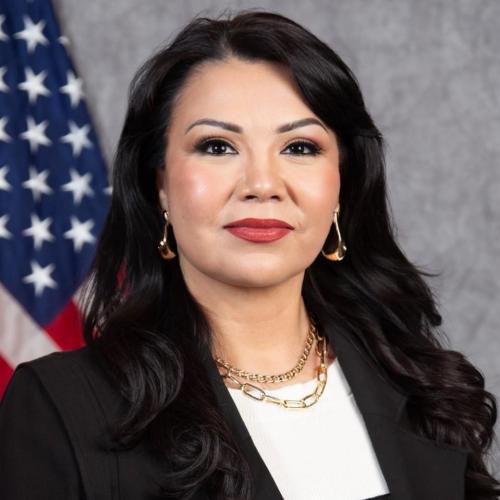
Johnna Blackhair

Deputy Bureau Director, Trust Services

Organization:

Johnna Blackhair is the Deputy Bureau Director for Trust Services at the Bureau of Indian Affairs. She oversees 16 divisions responsible for assisting 574 tribal governments and allottees (individual Indians owning federal Indian trust assets) in managing, protecting, and developing their trust lands and natural resources, totaling 56 million surface acres and 60 million acres of subsurface mineral estates.

Johnna began her federal career in 1991 in the Land Conservation Office at the Uintah and Ouray Agency in Fort Duchesne, Utah, where she conducted various real estate transactions, natural resource, and conservation functions. She served as the Realty Officer in 2002 at the agency and became the Southwest Regional Realty Officer in 2010.

Throughout her federal career, she has held a number of field leadership positions and supported national initiatives, including Superintendent positions at Mescalero Agency and Uintah and Ouray Agencies, Eastern Regional Office Regional Director, and Deputy Regional Director. In these positions, she also served as the Superintendent at the Seminole Agency in Florida, Syracuse Field Office in New York, and the Choctaw Agency, Mississippi.

In 2018, she temporarily served as the Acting Associate Deputy Bureau Director from January to April. This provided key experience for her that led to being named Deputy Bureau Director, Trust Services in September 2019. This includes oversight of the Indian Energy Service Center in Lakewood, Colorado. When the Bureau's Office of Indian Services Deputy Bureau Director position was vacated in 2022, Johnna served in an acting capacity from July 2022, - October 2023, lending stability and guidance until a new deputy bureau director could be selected.

As one of four Department of the Interior federal employees appointed to the Congressional Wildland Fire Mitigation & Management Commission, Johnna works with others leaders responsible for making recommendations to improve Federal wildland fire management policies related to the prevention, mitigation, suppression, and management of wildland fires and the rehabilitation of land in the United States devastated by wildland fires. She also serves as the bureau's most senior member on the National Wildland Fire Leadership Council.

Johnna is an enrolled member of the Chippewa Cree Tribe in Montana. She holds an associate's degree from Northern Montana College and a bachelor’s degree in information systems and business administration from Utah State University. She remains connected with her culture, traditional arts, crafts, and ceremonies, and enjoys time in the outdoors with her family.

Image

Johnna Blackhair

Contact Us

Trust Services
1849 C Street, N.W., Room 4600
Washington, DC 20240
Hours
Open 9:00 a.m.–4:00 p.m., Monday–Friday.
Telephone
(202) 208-3615

Bureau of Indian Affairs History

As the oldest bureau in the Department of the Interior, Bureau of Indian Affairs employees have experienced a long and complicated history when it comes to our federal relationship with Tribes. It involves 150 years of enforcing federal policies designed to terminate, relocate, and assimilate American Indians and tribal Nations. Collectively, these policies represented attacks on tribal sovereignty and did lasting damage to tribal communities, tribal economies, and the institutions of tribal governance. Only in the last 50 years have employees, who are tribal members themselves, been able to lift up policies designed to support tribal governance and self-determination. Today, the Bureau of Indian Affairs is proud to live out our mission to enhance the quality of life, promote economic opportunities, and to carry out the responsibilities entrusted to us to protect and improve the trust assets of American Indians and Alaska Natives.

Introduction

For over 200 years, dating back to the role it played in negotiating treaty agreements between the United States and tribes in the late 18th and 19th centuries, the BIA has embodied the trust and government-to-government relationships between the United States and federally recognized Tribes.

Over the years, the BIA has been involved in the implementation of federal laws that have directly affected all Americans. The General Allotment Act of 1887 opened tribal lands west of the Mississippi to non-Indian settlers, the Indian Citizenship Act of 1924 granted American Indians and Alaska Natives U.S. citizenship and the right to vote, and the New Deal and the Indian Reorganization Act of 1934 established modern tribal governments. The World War II period of relocation and the post-war termination era of the 1950s led to the activism of the 1960s and 1970s that saw the occupation of the BIA’s headquarters and resulted in the creation of the Indian Self-Determination and Education Assistance Act of 1975. The Tribal Self-Governance Act of 1994 along with the Self-Determination and Education Assistance Act have fundamentally changed how the federal government and the tribes conduct business with each other.

Commissioners

Since 1824, there have been 45 Commissioners of Indian Affairs, of whom six have been American Indian or Alaska Native:

Ely S. Parker, Seneca (1869-1871); Robert L. Bennett, Oneida (1966-1969); Louis R. Bruce, Mohawk-Oglala Sioux (1969-1973); Morris Thompson, Athabascan (1973-1976); Benjamin Reifel, Sioux (1976-1977); and William E. Hallett, Red Lake Chippewa (1979-1981).

William Hallett was the last to serve as BIA Commissioner following the establishment of the Assistant Secretary for Indian Affairs position within the Department of the Interior in 1977. Since then, 12 individuals, all American Indians, have been confirmed by the United States Senate for the post: Forrest J. Gerard, Blackfeet (1977-1980); Thomas W. Fredericks, Mandan-Hidatsa (1981); Kenneth L. Smith, Wasco (1981-1984); Ross O. Swimmer, Cherokee Nation (1985-1989); Dr. Eddie F. Brown, Tohono O’odham-Yaqui (1989-1993); Ada E. Deer, Menominee (1993-1997); Kevin Gover, Pawnee (1997-2001); Neal A. McCaleb, Chickasaw Nation (2001-2002); David W. Anderson, Lac Courte Oreilles Chippewa-Choctaw (2004-2005); and Carl J. Artman, Oneida Tribe of Wisconsin (2007-2008); Larry Echo Hawk, Pawnee (2009-2012); Kevin K. Washburn, Chickasaw Nation (2012-2016). Tara Katuk Mac Lean Sweeney, Native Village of Barrow Inupiat Traditional Government/Iñupiat Community of the Arctic Slope (2018-2021). Bryan Newland, Bay Mills Indian Community (2021-2025).

Bureau Directors

From 1981 to 2003, the title "Deputy Commissioner" denoted the head of the BIA. In 2003, after a major reorganization, the title was administratively changed to "Director," which is still in use today.

The first BIA Director was Terrance Virden, then Brian Pogue and Patrick Ragsdale (2005-2007). Jerold L. "Jerry" Gidner, Sault Ste. Marie Chippewa served from (2007-2010). Michael Black, Oglala Lakota Sioux, served as Director from 2010 to November 2016. Bruce Loudermilk, a citizen of the Fort Peck Assiniboine and Sioux Tribes of the Fort Peck Indian Reservation in Montana, served as Director from November 2016 to September 2017. Bryan Rice, a citizen of the Cherokee Nation of Oklahoma, was appointed in October 2017. On April 28, 2019, Darryl LaCounte was appointed. On October 30, 2024, Bryan Mercier became the 10th bureau director. He is a member of the Confederated Tribes of the Grand Ronde Community of Oregon.

Employees

In keeping with the authorities and responsibilities granted under the Snyder Act of 1921 and other Federal laws, regulations, and treaties, BIA employees across the country work with tribal governments in the administration of law enforcement and justice; agricultural and economic development; tribal governance; and natural resources management programs to enhance the quality of life in tribal communities.

Organization

The BIA carries out its core mission to serve 574 federally recognized Tribes through the Office of the Director, and four offices led by senior executive service leaders.

  • Within the Office of the Director resides three key programs. These include Emergency Management, Tiwahe, and Equal Opportunity and Civil Rights Programs.

  • The Office of Indian Services promotes the strength and health of American Indian communities by supporting social services like workforce development, child welfare, and tribal enrollment; uniform contract support for ISDEAA agreements, and improvement of BIA managed transportation systems.

  • The Office of Justice Services provides for the safety of American Indian communities by supporting protection of life and property, enforcing laws, maintaining justice and order, and by confining American Indian offenders in safe, secure, and humane environments.

  • The Office of Trust Services assists Tribes and allottees in managing, protecting, and developing their trust lands and natural resources, which total 56 million surface acres and 60 million acres of subsurface mineral estates. OTS aids landowners in stewardship of cultural, spiritual, and traditional resources, and helps create sustainable sources of revenue and jobs for their communities.

  • The Office of Field Operations delivers program services to federally recognized tribes and individual Indians and Alaska Natives, either directly or through contracts, grants or compacts. These programs are administered by 12 regional offices and 83 agencies that report to the BIA Deputy Director-Field Operations.

Indian Health Service

The BIA's responsibilities once included providing health care services to American Indians and Alaska Natives. In 1954, that function was legislatively transferred to the U.S. Department of Health, Education and Welfare, now known as the Department of Health and Human Services, where it has remained to this day as the Indian Health Service.

Contact Us

Bureau of Indian Affairs
MS-4606 1849 C Street, N.W.
Washington, DC 20240
Open 8:30 a.m.–4:30 p.m., Monday–Friday.

indianaffairs.gov

An official website of the U.S. Department of the Interior

Looking for U.S. government information and services?
Visit USA.gov