


Bureau of Indian Affairs
Frequently Asked Questions
Scroll down or click on one of the links below to find your subject
Official websites use .gov
A .gov website belongs to an official government organization in the United States.
Secure .gov websites use HTTPS
A lock
()
or https:// means you’ve safely connected to the .gov website. Share sensitive information only on official, secure websites.
Bureau of Indian Affairs
 Indian Affairs - Office of Public Affairs
WASHINGTON – Earlier this month, Tara Mac Lean Sweeney, a prominent Alaskan leader and acclaimed businesswoman with the Arctic Slope Regional Corporation, was sworn in as the Department’s Assistant Secretary for Indian Affairs. Sweeney was nominated by President Donald J. Trump in October 2017. Sweeney, a member of the Native Village of Barrow and the Iñupiat Community of the Arctic Slope, is the first Alaska Native and only the second woman in history to hold the position.
The Assistant Secretary for Indian Affairs oversees Interior’s manifold responsibilities to enhance the quality of life, promote economic opportunity, and provide quality educational opportunities for American Indians, Indian tribes, and Alaska Natives, while protecting and improving their trust assets.
“Tara is a results-driven team leader and coalition builder who has an impressive combination of business acumen and service to her community,” Secretary of the Interior Ryan Zinke said. “Her lifelong active engagement in Native American policy development and her outreach, advocacy, and organization skills are the combination we need to carry out the President’s reform initiative for Indian Country. She will be a great asset to the Department."
“I am honored to be able to serve Indian Country in this capacity,” Tara Sweeney said. “My goal is to develop strong relationships with Tribes, Alaska Native corporations, and Native Hawaiian Organizations to work on innovative solutions for lifting up our communities. I am motivated to work with Indian Country to find efficiencies inside the Bureau of Indian Affairs, improve service delivery and culturally relevant curriculum in the Bureau of Indian Education, and create a more effective voice for Tribes throughout the Federal Government. I am humbled by the confidence President Trump and Secretary Zinke have shown in me and ready to serve.”
Sweeney grew up in rural Alaska and has spent a lifetime actively engaged in state and national policy arenas focused on advocating for responsible Indian energy policy, rural broadband connectivity, Arctic growth and Native American self-determination. She has served her Arctic Slope Regional Corporation and its subsidiaries in a variety of capacities for nearly two decades. The $2.6 billion corporation is the largest locally owned and operated business in Alaska, with about 13,000 Iñupiat Eskimo members and 12,000 employees worldwide. In her role as the Executive Vice President of External Affairs, she was responsible for all facets of government affairs and corporate communications. Her primary responsibilities include strategic policy and position development, implementation and execution; engagement with federal and state executive and legislative branches on improving policies affecting Indian energy, taxation, resource development, government contracting, broadband development and access to capital; as well as all facets of corporate communication as official company spokesperson, including stakeholder engagement and coalition building.
Sweeney also has served in leadership positions on numerous business and nonprofit boards at both the state and national level, including chair of the Arctic Economic Council from 2015 to 2017; co-chair of the Alaska Federation of Natives (2013); Coast Guard Foundation Board of Trustees; the University of Alaska Foundation Board of Trustees; FCC Advisory Committee on Diversity for Communications in a Digital Age; Analytical Services, Inc.; Kohanic Broadcast Corporation (parent to the first Native American-owned, publicly supported FM radio station); Cherokee Nation New Market Tax Credit Advisory Board (CNB Economic Development Company, LLC, beneficiary); Breast Cancer Focus, Inc.; and Arctic Power.
Among her honors, Sweeney -- a lifetime member of the National Congress of American Indians -- was crowned Miss NCAI in 1993 and traveled the country as an ambassador for the organization. In 2003, Governor Frank Murkowski recognized Sweeney’s passion for rural Alaska, appointing her to his cabinet as Special Assistant for Rural Affairs and Education. In 2008 she was honored as a “Top Forty Under 40″ business leader by the Alaska Journal of Commerce. In 2014 & 2017 her team won two Emmy® Awards from the Northwest Chapter of the National Academy of Television Arts & Sciences, for its IAM IÑUPIAQ commercial campaign 2014 and its 2017 long-format documentary titled, “True North, the Story of ASRC”. She also served as co-chair for Senator Dan Sullivan’s (R-AK) successful Senate campaign. In 2017 she was inducted into the Anchorage ATHENA Society, a program of the Anchorage Chamber of Commerce that encourages the potential of women as valued members and leaders of the business community.
Born to Dr. Bryan Mac Lean and the Late Representative Eileen Panigeo Mac Lean, Sweeney is the granddaughter of the Late May Ahmaogak Panigeo and the Late Henry Panigeo of Barrow. She is the great granddaughter of the Late Bert and Nellie Panigeo and Isabel and Dr. Roy Ahmaogak. She was raised, attended schools and lived most of her life in rural Alaska in villages from Noorvik to Wainwright, Barrow, Bethel, and Unalakleet. She graduated from Barrow High School in 1991. A 1998 graduate of Cornell University School of Industrial and Labor Relations with a Bachelor of Science Degree, Sweeney is married to Kevin, and together they have two children, Caitlin and Ahmaogak.
Through its Bureau of Indian Affairs (BIA) and Bureau of Indian Education (BIE), Interior provides services (directly or through contracts, grants or compacts) to 1.9 million American Indians and Alaska Natives. There are 573 federally recognized American Indian tribes and Alaska Native corporations in the United States. The BIE provides education services to about 42,000 Indian students. The Indian trust, co-managed by BIA and the Office of the Special Trustee, consists of 55 million surface acres and 57 million acres of subsurface mineral estate. More than 11 million acres belong to individual Indians and nearly 44 million acres are held in trust for Indian tribes. On these lands, the Department manages more than 122,817 revenue-producing leases. In conjunction with the Department of the Treasury, Interior also manages about $4.9 billion in Indian trust funds. In Fiscal Year 2016, $1.2 billion was received into and disbursed from tribal and individual Indian beneficiaries’ accounts.
For Immediate Release: August 16, 2018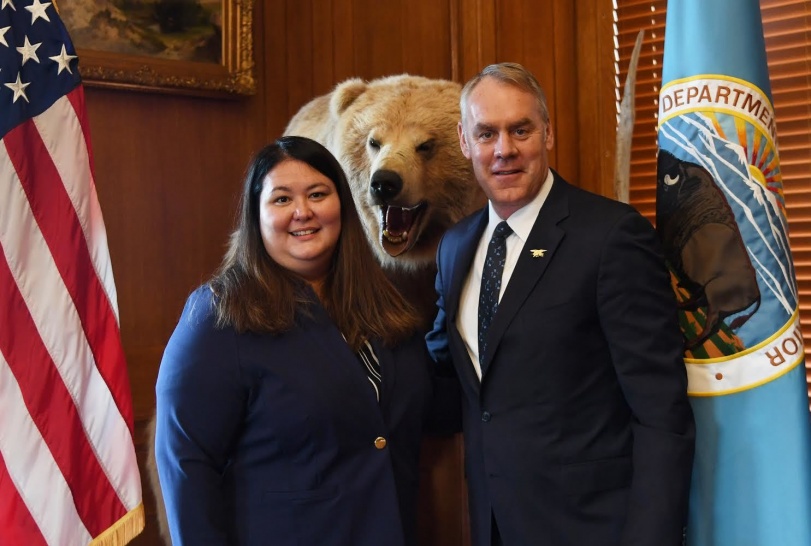 Indian Affairs - Office of Public Affairs
WASHINGTON— U.S. Secretary of the Interior Ryan Zinke and Blackfeet Nation Chairman Harry Barnes today signed documents implementing the Blackfeet Water Rights Settlement of 2016 and the accompanying Blackfeet Water Compact, which resolve a decades-long battle by the Blackfeet Tribe of Montana to protect its water rights while also accommodating state and federal water requirements. Secretary Zinke has worked on the issue as a State Senator in the Montana State Legislature, as the U.S. Representative from Montana, and now as Secretary of the Interior.
The parties signed the Blackfeet Tribe-Montana-United States Compact as required by the Blackfeet Water Rights Settlement Act. The Secretary and the Chairman also executed certain Waivers and Releases of Claims, an Execution Statement, and a Process Agreement. After the Compact is executed, the parties will file the Compact with the Montana Water Court, beginning the process for issuing a final decree of the Tribe’s water rights as part of Montana’s state-wide adjudication. Issuance of the final decree is one of several events that must occur for the Settlement to become final and enforceable.
“The Blackfeet are one of Montana's great warrior Nations, and like true warriors, they fought every step of the way for their people to get this settlement over the finish line. I was proud to stand by them as a State Senator, Congressman and now Secretary of the Interior,” said Secretary Zinke. “The Blackfeet have given up so much during this long process. Water is more than a drinking source to the Blackfeet, it’s their life source and we must respect and honor their culture and rights. I’m grateful for the work of many tireless officials and public servants over the years from the Tribe, State, Congress, and Federal government who have made this day a reality."
“This journey for justice and empowerment for the Blackfeet people with respect to one of our most vital resources has taken well over a century and a half,” said Blackfeet Tribe Chairman Harry Barnes. “Now, we start on a new path to realizing what our ancestors had always valued: the preservation of our culture, our people, and our opportunities to make real the treaty promise of a homeland for the Blackfeet people and our right to control our destiny.”
“It is my pleasure to extend my congratulations to Chairman Barnes and members of the Blackfeet Tribe on this important milestone for their community,” said Governor Steve Bullock of Montana. “Today’s agreement reflects many years of dedication and hard work on behalf of state, federal and tribal partners and our congressional delegation. I’m pleased that together we are able to celebrate and affirm the sovereign rights of the Blackfeet Nation to their water resources.”
“The Blackfeet Tribe has been waiting a long time for this day,” said Senator Steve Daines. “Today’s ceremony marks an important step toward the Blackfeet Tribe and surrounding communities having access to reliable water and seeing improvements to water infrastructure projects critical to farmers, ranchers and the local economy.”
“The Blackfeet Water Compact reaffirms water rights, saves taxpayers from costly litigation, and invests in critical water infrastructure in northwest Montana,” Senator Jon Tester said. “I was proud to have introduced and fought for this bill in Congress and will continue to hold Congress accountable to the Blackfeet Nation to secure the funding needed to carry out this historic agreement. I want to congratulate Chairman Barnes and the Blackfeet people on the culmination of years of hard work.”
“Today is a great day for Chairman Barnes and the Blackfeet Tribe, who have waited far too long for this agreement,” said Congressman Greg Gianforte. “The settlement is the direct result of the hard work and dedication of the Tribe, the Department of Interior, and other key stakeholders. I will continue working with the Tribe and my colleagues to implement the full settlement in a timely manner.” The Blackfeet Water Rights Settlement is found at Title III, Subsection G of the Water Infrastructure Improvements for the Nation, or WIIN, Act. That legislation was signed on December 16, 2016. The Settlement:
The Blackfeet Tribe’s water rights were reserved by treaty with the United States in 1855. Starting in the 1970s, the Tribe more vigorously worked to defend and define its rights in the face of demands by other users to the water resources covered by the treaty agreement.
On April 20, 2017, Blackfeet Tribe members voted in a referendum to accept the Blackfeet Water Compact and Settlement Act, which had been negotiated between the Tribe and the state and approved by the Montana legislature in 2009.
The tribal members’ approval of the compact confirmed the Blackfeet Tribe’s waters rights and jurisdiction over its water, and provided more than $470 million - $422 million from the federal government and $49 million from the state – for water-related projects.
Congress included initial funding for the Blackfeet Water Rights Settlement Act at the level of $800,000 in its enacted spending bill for Interior for Fiscal Year 2017.
While serving as a Montana state senator, Secretary Zinke began working to resolve the Tribe’s water rights issue. He continued to do so when he was elected to Congress as the state’s single House member and then to his current post.
On March 9, 2018, Secretary Zinke signed the first authorization of funds for the Blackfeet Tribe under its expenditure plan. The authorization transfers the $800,000 to the Blackfeet Settlement Trust Fund set up under the act.
The funds will be used for the following purposes:
The Blackfeet Water Rights Settlement is a crucial and long-awaited step towards achieving the permanent tribal homeland promised to the Blackfeet Tribe in the treaties and agreements ratified by Congress between 1855 and 1896 that serve as the foundation of the relationship between the Tribe and the United States: Treaty with the Blackfeet, 1855, Oct. 17, 1855, 11 Stat., 657, Ratified Apr. 15, 1856, Proclaimed Apr. 25, 1856, Act of April 15, 1874 (18 Stat. 28, chapter 96), Agreement of 1888, ratified by the Act approved May 1, 1888 (25 Stat. 113), Agreement of 1895, dated September 26, 1895, ratified by the Act approved June 10, 1896 (29 Stat. 321, 353).
Indian Affairs - Office of Public Affairs
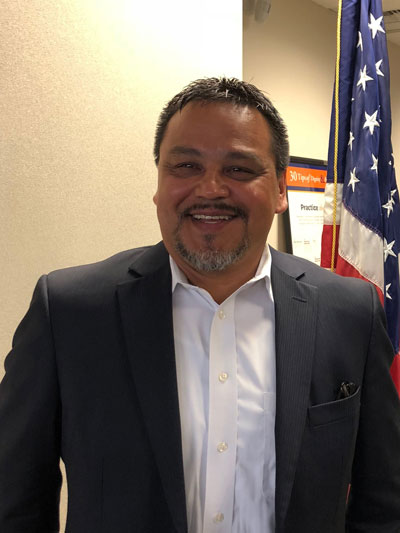
WASHINGTON – Today U.S. Secretary of the Interior Ryan Zinke and the Bureau of Indian Affairs announced the selection of Eugene R. Peltola Jr. (of Yupik and Tlingit descent), from Orutsararmiut Native Council, a federally recognized tribal government, as Regional Director for the Bureau of Indian Affairs (BIA) in Alaska. The BIA Alaska Regional Office oversees offices in Anchorage and Fairbanks, all of which provide services to 227 federally recognized Alaska Native tribes. The selection of Mr. Peltola, fulfills a commitment Secretary Zinke made to Alaska Natives while visiting in 2017.
“During my visit with the Alaska Federation of Natives board last June, I committed to give strong consideration to filling this position with a First Alaskan and I am very pleased that the Bureau of Indian Affairs has filled the Alaska regional director’s post with an incredibly qualified senior executive from one of our sister-agencies.,” said Secretary of the Interior Ryan Zinke. “With his experience in working for Interior in the field as a refuge manager, as well as his deep knowledge of Alaska Native subsistence and land issues, Gene is the right person for this important post. Alaska is our starting point for reorganizing the Interior Department for the next 100 years.”
“I want to welcome Gene Peltola to the Bureau of Indian Affairs as the new director of our BIA Alaska Regional Office and to the BIA regional management team,” said PDAS Tahsuda. “The Alaska regional director post is vital to our mission of carrying out our trust responsibilities to Alaska Native tribes. I am gratified that, after so many years, it is now held by someone from Alaska who knows the Alaska Native people, their history and cultures.”
Alaska Regional Director Peltola said, “Being an Alaskan born Alaska Native, I feel very honored and privileged to be selected for the position of regional director for the Bureau of Indian Affairs in Alaska. This will provide me the opportunity to contribute to the continued betterment of our people, and, have a voice in the manner which subsistence opportunities are presented for Alaska Natives and other rural residents of the state. I look forward to the new challenges this responsibility brings and being able to contribute to the consultation and reorganization of the Department of Interior. The decisions that we make today will carry forth and affect not only Alaska Natives, but many others for generations to come.”
“Alaska Federation of Natives is pleased with the appointment of Gene Peltola Jr. as the new Alaska BIA Area Director,” said AFN President Julie Kitka. “The BIA plays a critical role in Alaska working closely with our tribes and tribal consortiums on behalf of our people. We thank Secretary Ryan Zinke for his strong support of self-determination and efforts to strengthen the federal trust responsibility.”
In his most recent capacity at U.S. Fish and Wildlife Service (USFWS) as the Federal Subsistence Management Program lead, Regional Director Peltola was responsible for coordinating and implementing subsistence management on all federal lands in Alaska on behalf of the Bureau of Indian Affairs, the Bureau of Land Management, the National Park Service, the USFWS, and the U.S. Forest Service.
While he has worked in both the public and private sectors since 1984, Peltola’s 34-year federal career has been with the USFWS in Alaska, where he worked at 3 National Wildlife Refuges including as a zone supervisor for Refuge Law Enforcement and Refuge Manager for the Yukon Delta National Wildlife Refuge.
Peltola has served in local government, on corporate boards, and owned and operated two businesses. From October 2010 to September 2012, he served as vice-mayor and council member for the city of Bethel, Alaska.
While serving the city of Bethel, he sat on the boards of three Alaska Native village corporation entities: Bethel Solutions, LLC, a holding company of an Alaska Native Claims Settlement Act (ANCSA)-established village corporation specializing in commercial real estate construction Bethel Services, Inc., a subsidiary of an ANCSA-established corporation specializing in government contracting and Bethel Native Corporation, the village corporation for the community of Bethel.
For Immediate Release: July 9, 2018
 Indian Affairs - Office of Public Affairs
FARGO, ND - Today, U.S. Department of the Interior Secretary Ryan Zinke recognized Bureau of Indian Affairs (BIA) - Turtle Mountain Agency Law Enforcement Officers Stacey Larocque and Michael Slater and BIA-Standing Rock Agency Law Enforcement Officers Wayland Bad Hand and Gary Sandland with the Secretary’s Commendation Award for their quick and heroic actions to save the lives of individuals who overdosed on deadly, synthetic opioid drugs.
"Officers Larocque, Slater, Bad Hand, and Sandland are heroes and role models for every one of the Department’s 4,000 law enforcement officers,” said Secretary Zinke. “Thanks to their quick actions and cool heads, they were able to save lives. I’m incredibly proud and honored to have them on our team.”
“Teamwork and training saved lives,” said Principal Deputy Assistant Secretary for Indian Affairs John Tahsuda. “Our officers are dedicated to protecting Indian Country every day. I applaud these officers for utilizing their training in an exceptional manner while under pressure to save tribal members from the deathly grips of their opioid overdose. They saved members of Indian Country’s family.”
“On behalf of the Turtle Mountain Band of Chippewa, we would like to commend Sergeant Stacy Larocque and Officer Michael Slater on receiving the letters of commendation and the pinning of the Life Saving Ribbons,” said Chairman Turtle Mountain Band of Chippewa Jamie S. Azure. “Our community is proud of all of our law enforcement and grateful for all of our uniformed officers and emergency services who knowingly put their lives on the line to protect others in the line of duty.”
Officer Slater arrived at the home on the Turtle Mountain Reservation in New Town, ND, and found a man unconscious and with no pulse. The family at the scene alerted Officer Slater about the suspected overdose. Officer Slater administered CPR until Officer Larocque arrived to administer Naloxone, commonly referred to as Narcan. The man gained consciousness after three doses and within minutes was responsive to the first responders.
The Secretary recognized Sergeant Larocque and Officer Slater during a roundtable meeting with North Dakota’s five Tribes. The conversation focused on issues each tribe faces with the opioid crisis and included options and opportunities to help the communities.
Officer Bad Hand responded to a reported assault of a female on the Standing Rock Reservation. Upon arriving at a residence, Officer Bad Hand found the unresponsive woman exhibiting signs of an opioid overdose. Officer Gary Sandland arrived at the scene and retrieved the Narcan, a dose in the form of a nasal spray, from the Officer Bad Hand’s patrol car. The woman regained consciousness after the medication was administered by Officer Bad Hand. Officer Sandland continued to assist by holding the IV bag of Narcan that the responding Standing Rock EMS had inserted in the distressed woman’s arm.
The Secretary’s recognition of Officers Larocque, Slater, Bad Hand, and Sandland was followed by a roundtable meeting with the Tribes from North Dakota – Sisseton-Wahpeton Oyate, Spirit Lake, Standing Rock Sioux Tribe, The Three Affiliated Tribes, and Turtle Mountain of Chippewa. The conversation focused on issues each Tribe faces with the opioid crisis and included options and opportunities to help the communities.
“President Trump has made it clear that ending the opioid crisis is a top priority, and I’m honored to have the government-to-government relationship with North Dakota’s tribal nations,” said Secretary Zinke. “For too many, opioids have torn the fabric of the community apart, leaving children orphaned or in dangerous situations. Under President Trump’s leadership, the federal government is partnering with tribes to identify and prioritize community-based recovery solutions. This would both help victims return to health and also keep our children safe and close to home.”
“This Round Table has provided another opportunity to advance the essential dialogue that includes Tribal communities in the national opioid crisis,” said Chairwoman Myra Pearson of the Spirit Lake Tribe. “The opioid epidemic is another silent threat to our families and it is one that all tribal communities should all be aware of. Proper storage and disposal of medication are effective ways to protect against potential abuse. I encourage everyone to learn to identify the signs of opioid abuse, the signs of an opioid overdose and how to respond to an overdose until trained first responders arrive. Together, we can help save lives.”
“I extend my deepest gratitude to Secretary Zinke for spotlighting this important issue and meeting with the North Dakota tribal leaders,” said Chairman Mark Fox of the Three Affiliated Tribes. “For the health and wellness of Indian Country, we must continue to work together on developing and implementing strategies to overcome the threats posed by the nationwide opioid crisis. I am committed to continuing the open dialogue started at the Round Table with the Administration to stop the encroachment of this epidemic in its tracks.”
Earlier in the year, Secretary Zinke established the first of its kind law enforcement Joint Task Force (JTF) on opioids. The JTF brings together officers from the Bureau of Indian Affairs, state and local law enforcement, and Tribal law enforcement. The JTF conducts investigations and sting operations on Reservations at the request of Tribal leadership.
At the beginning of the year, Secretary Zinke held a series of tribal community visits on the Opioid Crisis in Indian Country — Tohono O’odham, Gila River, Salt River, and AK-Chin in Arizona; Oneida in Wisconsin; Spokane, Colville, and Lummi Nations in Washington State. The Interior’s Joint Task Force was established by Secretary Zinke to help achieve President Donald Trump's mission to end the opioid epidemic. The Secretary has publicly praised operations led by the new Interior Joint Task Force that resulted in the seizure of $2.5 Million worth of Meth and $22,000 in Marijuana, Heroin and Other Narcotics near Pueblo lands in New Mexico; and a opioid bust around tribal lands in Arizona that seized 9,050 Fentanyl pills, 48.2 pounds of methamphetamine, 1.2 pounds of heroin, 863 pounds of marijuana, one-half pound of cocaine, and $30,000 in cash.
A Memorandum of Agreement between the Bureau of Indian Affairs and the Indian Health Service supports training for BIA Law Enforcement in administering Narcan, a naloxone nasal spray. Officer Jonathan Vigil was the first BIA Officer to successfully use Narcan while on duty on August 2, 2016.
For Immediate Release: July 26, 2018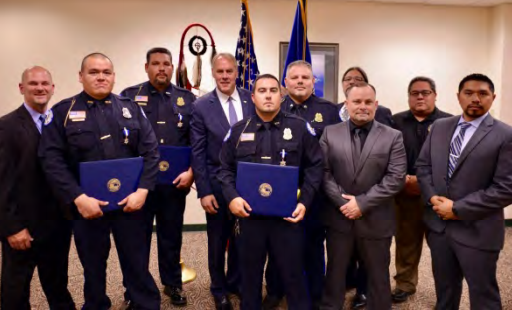
Scroll down or click on one of the links below to find your subject
The Highway Safety Act of 1966, U.S.C. Title 23, Section 402, provides U.S. Department of Transportation funding to assist Indian tribes in implementing traffic safety projects. These projects are designed to reduce the high number of traffic crashes and their resulting fatalities, injuries and property damage within Indian communities.
All federally recognized tribal governments are encouraged to take an active part in the Bureau of Indian Affairs (BIA) Indian Highway Safety Program (IHSP) by applying for a grant that meets the requirements of U.S.C. Title 23, Section 402.
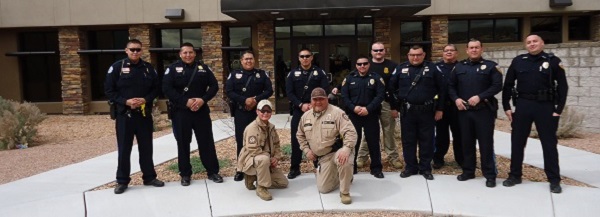
OJS Mission Statement
To provide justice services and technical assistance to federally recognized Indian tribes and communities, and to respect and protect sovereignty through promotion of self-determination.
Guiding Principles
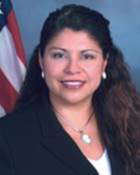
Deputy Bureau Director
Office of Indian Services
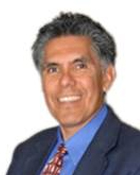
Associate Deputy Bureau Director
Office of Indian Services
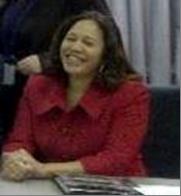
Evangeline Campbell
Chief, Division of Human Services
Mrs. Evangeline M. Campbell is an enrolled member of the Narragansett Indian Tribe of Rhode Island.
Mrs. Campbell received her Master's Degree of Social Work from the University of California, in Los Angeles and a Bachelor's Degree in Health and Human Services from the University of Rhode Island. Mrs. Campbell is also a former Commissioned Officer in the United States Army Reserves.
Best Practices for Serving Children, Youth, and Parents Experiencing Domestic Violence
Substance Abuse and Mental Health Services Administration

indianaffairs.gov
An official website of the U.S. Department of the Interior