The Branch of Fisheries, Wildlife and Recreation (BFWR) provides competitive funding to federally-recognized Tribes to maintain and enhance fish hatcheries. Fish hatchery facilities are any structure used to spawn, hatch, rear, hold, care for, or stock fish and/or shellfish.
How to Apply
BFWR is now accepting project proposals for 2026 funding. All applications must be submitted to the appropriate BIA Regional Office contact by July 1, 2026.
Federally-recognized Tribes may submit project proposals to the Fish Hatchery Maintenance Program contact at their Bureau of Indian Affairs (BIA) Regional Office. Project proposals are scored according to published ranking criteria, with the highest-scoring projects receiving funding.
All project proposals must include (1) a hatchery facility description form and (2) a hatchery maintenance project proposal form for each hatchery that is part of the proposal. Both forms are included in the annual application.
Detailed information on what to include in your project proposal, ranking criteria, and information on BIA Regional Office Fish Hatchery Maintenance Program contacts can be found in the annual application linked below.
Previously Funded Fish Hatchery Maintenance Projects
Miccosukee Tribe of Indians of Florida
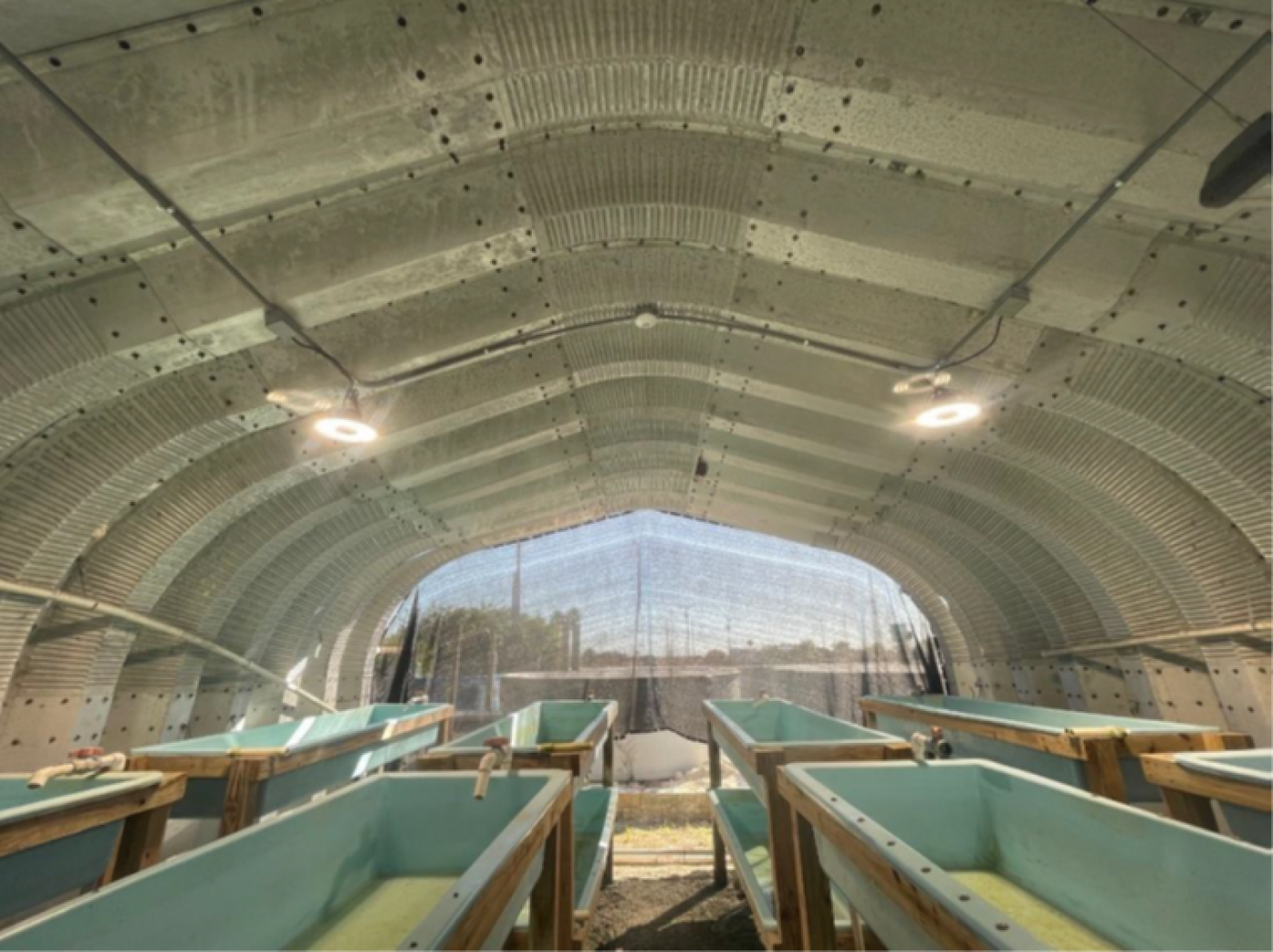
The Miccosukee Tribe of Indians of Florida, in partnership with the U.S. Fish and Wildlife Service, established the Aquatic Research and Repopulation Center (ARRC) in 2010 to support ecological restoration, cultural preservation, and Tribal food sovereignty. The hatchery plays an essential role in supporting endangered wildlife and ensuring that culturally significant fish and aquatic species remain available to Tribal members without the risk of mercury contamination – an ongoing threat in the Everglades. Improvements funded through the BIA have increased the facility’s efficiency, durability, and production capacity.
ARRC operates as a recirculating aquaculture system (RAS) facility dedicated to:
• Propagating native aquatic species for ecological restoration
• Supporting cultural harvesting traditions and Tribal food security
• Enhancing opportunities for economic development
• Reducing mercury-related health risks to Tribal members through safe, hatchery-produced fish
Key Species and Conservation Efforts
Florida Gar & Bowfin
ARCC produces mercury‑free Florida gar (Lepisosteus platyrhincus) and bowfin (Amia calva), two culturally important species central to the Miccosukee diet. Thousands have been reintroduced into Tribal trust lands, especially the Miccosukee Reserved Area. Eastern mosquitofish are also raised on-site to support natural feeding for gar and bowfin.
Everglades & Slough Crayfish
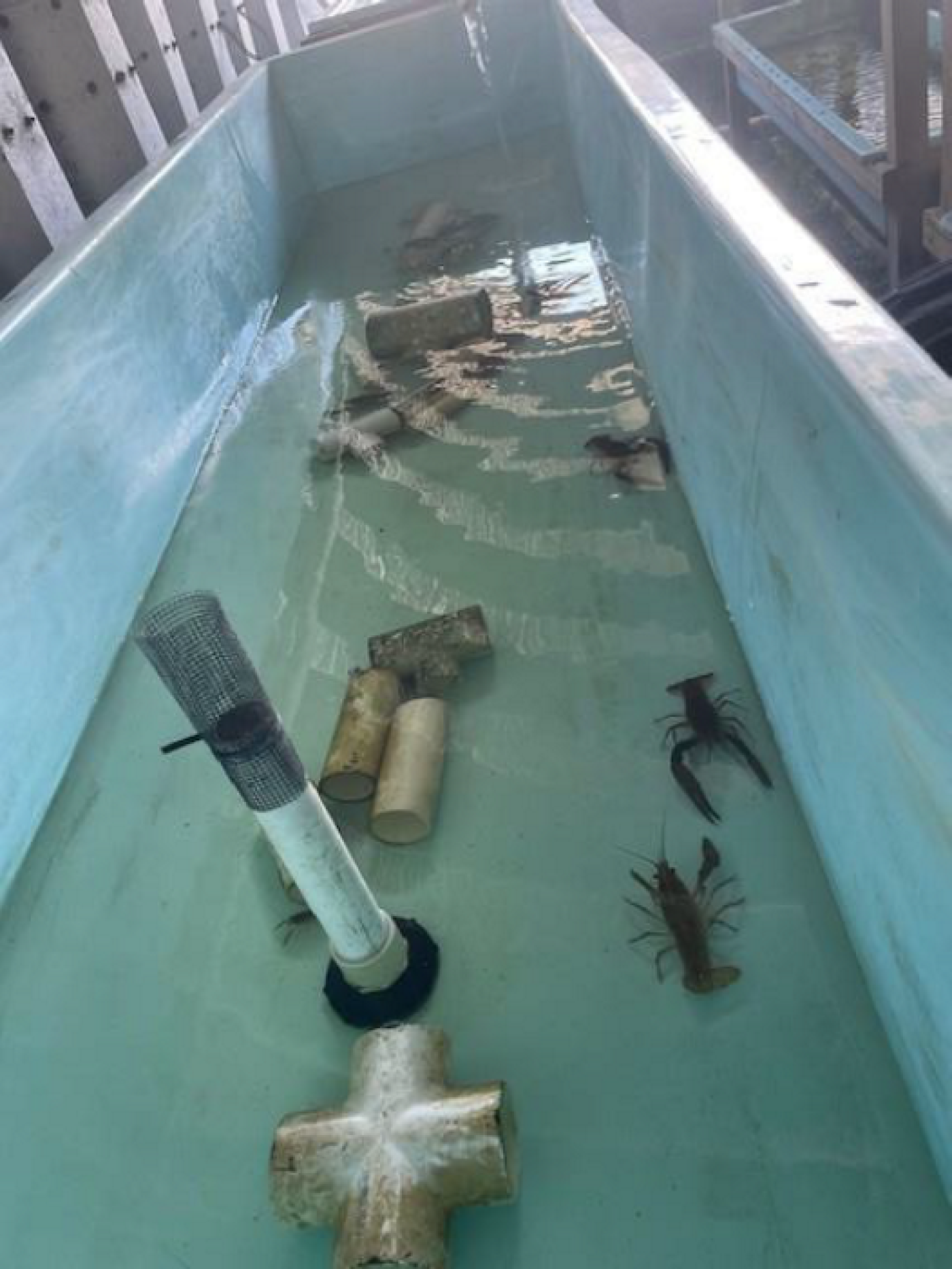
Crayfish populations – now devastated by predation from invasive Asian swamp eels – have fallen by up to 99% in some areas throughout the Everglades. ARRC reintroduces roughly 2,000 Everglades crayfish (Procambarus alleni) and slough crayfish (Procambarus fallax) into Tribal waterbodies annually. Recent science has recognized crayfish to be a keystone food source for predatory fish (gar & bowfin), wading birds, and even the Everglades snail kite (opportunistically).
Native Florida Apple Snail & Everglades Snail Kite
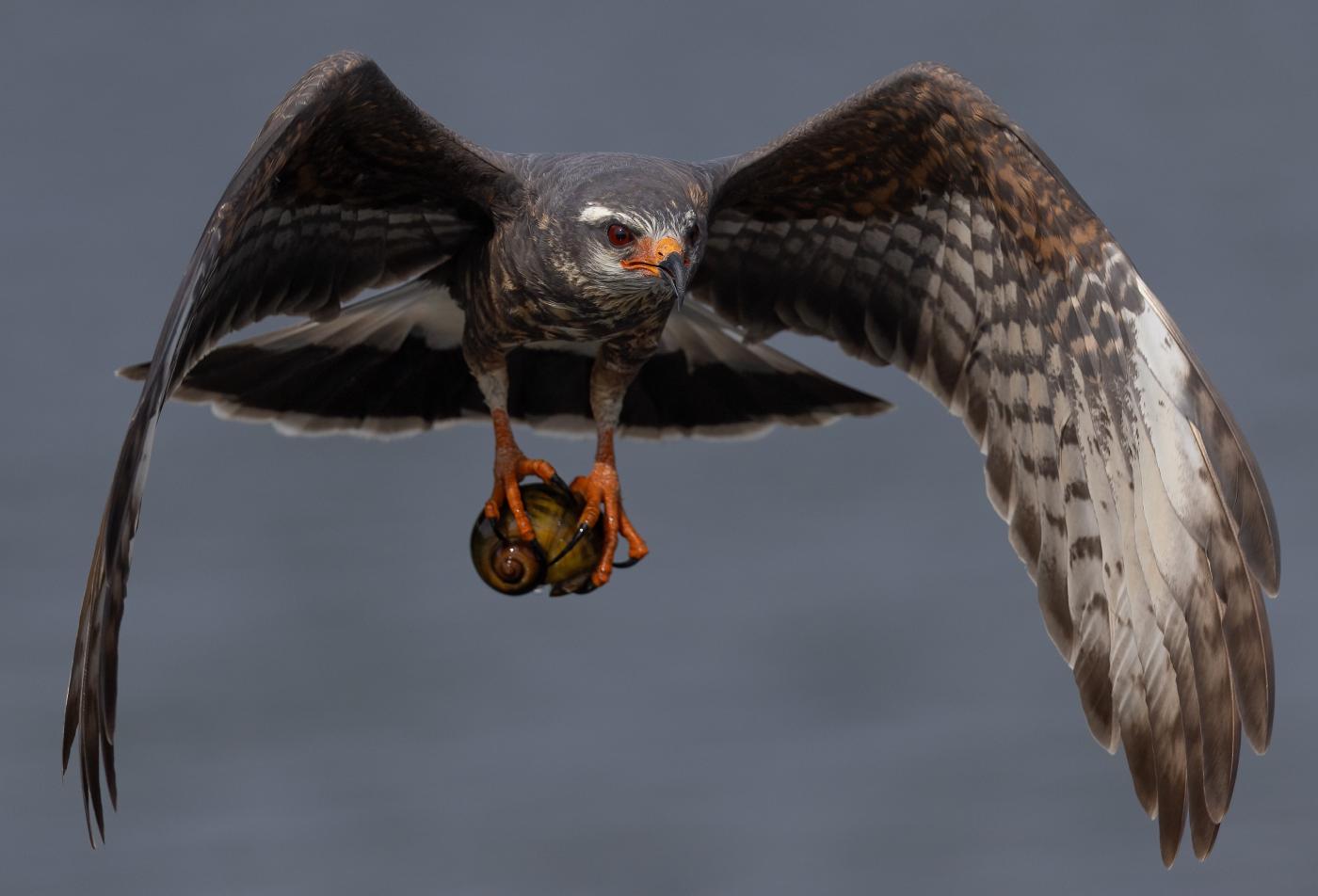
ARRC is one of the only facilities producing native Florida apple snails (Pomacea paludosa), the primary food source for the endangered Everglades snail kite. Declines in apple snails from invasive species competition and altered hydrology have severely impacted kite populations. The Tribe contributes more than 3,000 apple snails per year toward restoration, releasing them onto Tribal trust lands including the “Alligator Alley” reservation. This program supports federal and state conservation efforts while reinforcing Tribal sovereignty in environmental stewardship.
Environmental Health & Facility Improvements
Recent improvements – funded in part by BIA – have strengthened durability, efficiency, and long-term sustainability:
- Installation of LED lighting and motion sensors to deter predation from small rodents and birds, and circulation fans to reduce mold and excess moisture
- Replacement of water pumps for improved water quality and flow
- Construction of three waterproofed concrete sumps for recirculation systems
- Major storm-related plumbing and electrical repairs
- Removal of aging canopy structures to prepare the site for a pole-barn structure that will provide long-term shade and protection from the elements, harmful algal blooms, and fluctuating water quality
Future Plans & Growth
The Miccosukee Aquatic Research & Repopulation Center is expanding its capacity to support a broader range of restoration needs and Tribal initiatives. Upcoming goals include:
- Completing pole-barn construction and system upgrades
- Increasing production of crayfish, apple snails, largemouth bass, bluegill, golden shiners, and minnows
- Further improving operational sustainability and facility resilience
- Strengthening Tribal, state, and federal partnerships
- Including Tribal youth through internships that will also support construction and train young people in aquaculture, fisheries science, plumbing, electrical work, and facility maintenance.
Regional Contact Information
| Region | Contact Name | |
|---|---|---|
| Alaska | Rosalie Debenham, Fisheries and Wildlife Biologist | rosalie.debenham@bia.gov |
| Eastern | Mikail Kane, Regional Natural Resource Specialist | mikail.kane@bia.gov |
| Eastern Oklahoma | Justin Morgan; Soil Conservationist | justin.morgan@bia.gov |
| Great Plains | Todd Hauge; Safety of Dams | hauge.todd@bia.gov |
| Midwest | Chase Meierotto; Acting Regional Branch Chief, Branch of Fish, Wildlife, and Parks | chase.meierotto@bia.gov |
| Navajo | Delores Becenti, Regional Geospatial Coordinator | delores.becenti@bia.gov |
| Northwest | Ashton Harp, Fisheries Biologist | ashton.harp@bia.gov |
| Pacific | Peter DeJongh; Regional Biologist | peter.dejongh@bia.gov |
| Rocky Mountains | Frank D. Rollefson, Regional Wildlife Biologist | frank.rollefson@bia.gov |
| Southern Plains | Robert Codopony; Acting Natural Resources Branch Chief | Robert.Codopony@bia.gov |
| Southwest | D. Chris Kitcheyan, Regional Biologist | david.kitcheyan@bia.gov |
| Western | Catherine Wilson, Supervisory Water Rights Specialist | catherine.wilson@bia.gov |
Additional Information
Related Pages
Contact Us
Albuquerque, NM 87104